
 Adan Kendric
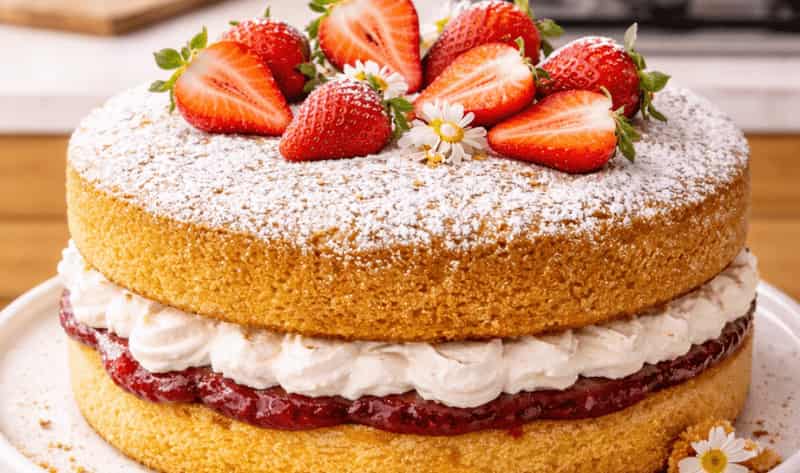
 The Jamie Oliver Victoria Sponge is a classic British cake made with equal parts butter, sugar, eggs, and flour, baked into two light layers and filled with jam and cream. It’s simple on paper, yet technique makes all the difference — the texture should be soft, airy, and delicately golden.
This cake serves 8–10 people and takes about 1 hour from start to finish. In this complete guide, you’ll learn how to cream butter properly, avoid a dense sponge, and assemble it so the layers stay even and elegant.
What Makes This Worth Making
- Timeless British classic
It’s a staple of afternoon tea and traditional baking. - Light, airy texture
When made correctly, the sponge feels soft and springy, not heavy. - Minimal ingredients
The simplicity makes it reliable and easy to master. - Perfect for celebrations or tea
It looks elegant without complicated decoration. - Customisable filling options
Jam, whipped cream, buttercream, or fresh berries all work beautifully.
What Is Jamie Oliver’s Victoria Sponge?
The Jamie Oliver Victoria Sponge is a traditional British layer cake made by creaming butter and sugar, adding eggs and flour, then baking two even sponge layers filled with jam and cream.
It relies on proper aeration rather than heavy flavourings for its character.
Jamie Oliver Victoria Sponge Ingredients List
Serves 10
- 200 g unsalted butter (softened)
- 200 g caster sugar
- 4 large eggs
- 200 g self-raising flour
- 1 tsp baking powder
- 1 tsp vanilla extract
- 2 tbsp milk (if needed)
For the Filling
- 4 tbsp strawberry or raspberry jam
- 200 ml double cream (whipped)
- Icing sugar for dusting
How to Prepare Jamie Oliver Victoria Sponge – Simple Steps
Step 1: Cream Butter and Sugar Properly
Preheat oven to 170°C and line two 20 cm cake tins.
Beat softened butter and sugar together for 3–5 minutes until pale and fluffy.
Proper creaming introduces air into the mixture, which is key for a light sponge. The mixture should look almost creamy-white, not yellow.
Step 2: Add Eggs Gradually
Add eggs one at a time, beating well after each addition.
If the mixture begins to curdle, add a tablespoon of flour to stabilise it.
Gradual incorporation ensures a smooth batter and even rise.
Step 3: Fold in Dry Ingredients
Sift flour and baking powder together.
Fold gently into the mixture using a spatula. Avoid overmixing, as this develops gluten and creates a dense cake.
Add milk only if the batter feels too thick — it should drop easily from a spoon.
Step 4: Bake Evenly
Divide the batter evenly between the tins and level the tops.
Bake for 20–25 minutes until golden and springy to the touch. A skewer inserted in the centre should come out clean.
Avoid opening the oven too early to prevent sinking.
Step 5: Cool Completely
Let cakes cool in tins for 10 minutes, then transfer to a wire rack.
Cooling fully before filling prevents cream from melting.
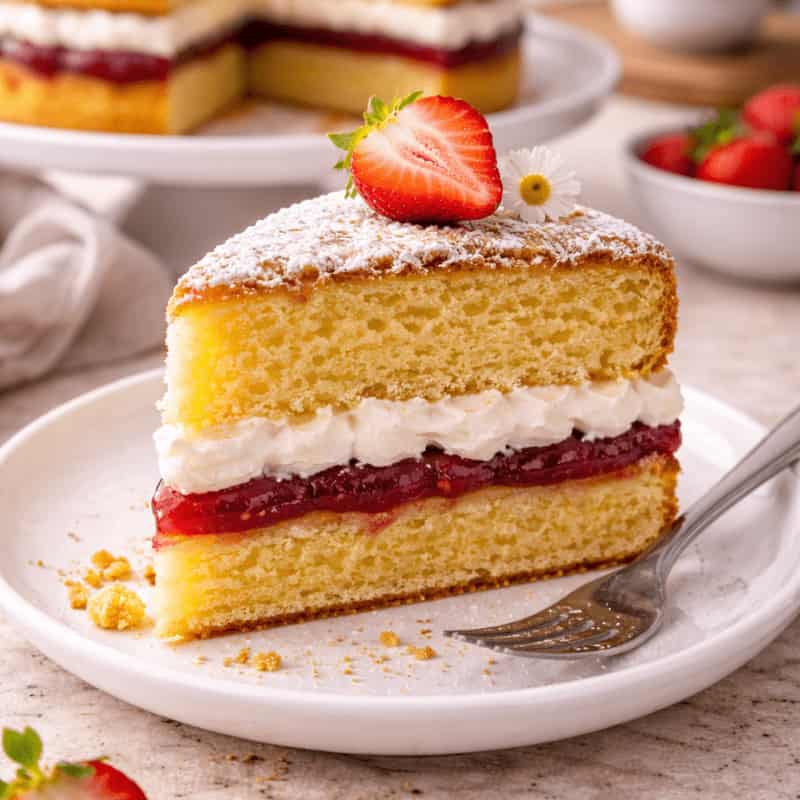
Step 6: Assemble with Care
Place one layer on a serving plate.
Spread jam evenly across the surface, then add whipped cream.
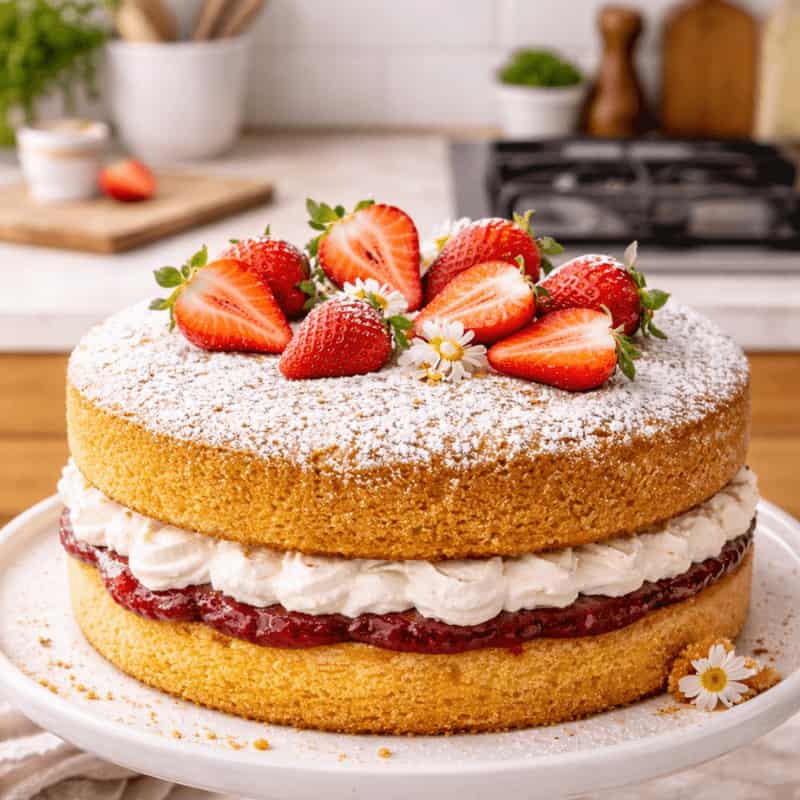
Place the second sponge on top and dust lightly with icing sugar.
Press gently — too much pressure can push the filling out.
Common Mistakes to Avoid When Making Jamie Oliver Victoria Sponge
- Under-creaming butter and sugar
Results in a heavy sponge. - Overmixing flour
Makes cake dense. - Using cold ingredients
Prevents smooth batter. - Overbaking
Leads to dry texture. - Filling while warm
Causes cream to melt.
Delicious Serving Ideas for Jamie Oliver Victoria Sponge
- Serve with fresh berries
Adds colour and freshness. - Add lemon zest to the cream
Introduces subtle brightness. - Use raspberry jam instead of strawberry
Provides sharper contrast. - Add a thin layer of buttercream
Makes it richer and more structured. - Serve with tea or coffee
Complements the light sweetness.
Expert Tips to Get This Jamie Oliver Victoria Sponge Just Right
- Use room temperature ingredients
Ensures smooth mixing. - Weigh ingredients precisely
Victoria sponge relies on equal ratios. - Do not overfill tins
The batter should sit about two-thirds up the tin. - Rotate the tins halfway if the oven cooks unevenly
Promotes even rise. - Let the sponge rest slightly before slicing
Improves structure.
How to Add More Flavour to Jamie Oliver’s Victoria Sponge
- Add vanilla bean paste
Enhances aroma. - Use orange zest in the batter
Brightens flavour. - Brush layers with sugar syrup
Adds moisture. - Add mascarpone to the cream
Creates richer filling. - Layer fresh strawberries inside
Adds texture.
How to Adjust Victoria Sponge for Kids
- Use mild strawberry jam
- Reduce cream slightly
- Add colourful sprinkles on top
- Make cupcakes instead of layers
- Keep flavour simple and sweet
Best Way to Store Victoria Sponge Leftovers
- Store in an airtight container
- Refrigerate if filled with cream
- Best eaten within 2 days
- Bring to room temperature before serving
Best Ways to Reheat Victoria Sponge Leftovers
- Serve at room temperature
- Avoid microwaving a filled cake
- Warm unfrosted slices gently if needed
- Let the cream soften naturally
Nutritional Value (Per Serving)
Approximate values:
- Calories: 480 kcal
- Protein: 6 g
- Carbohydrates: 55 g
- Fat: 26 g
- Fiber: 1 g
- Sodium: 260 mg
FAQs
Why did my Victoria sponge sink in the middle?
A sunken centre usually happens if the oven door is opened too early or the cake is underbaked. Make sure the sponge is fully set before removing it and avoid disturbing it during the first 20 minutes of baking.
What makes a Victoria sponge light and fluffy?
Properly creaming butter and sugar until pale and airy is the key. This step traps air in the batter, which expands in the oven and creates a soft, even crumb.
Can I make Victoria sponge without self-raising flour?
Yes. Replace 200 g self-raising flour with 200 g plain flour plus 2 teaspoons of baking powder. Sift well to ensure even distribution and proper rise.
Should Victoria sponge be stored in the fridge?
If filled with fresh cream, it should be refrigerated and brought back to room temperature before serving. If filled only with jam or buttercream, it can stay at room temperature in an airtight container for up to 2 days.
Final Words
Victoria sponge is all about precision and patience. When butter is properly creamed and the batter handled gently, you’ll achieve a light, tender cake that feels timeless and effortlessly elegant.
More recipes to add to your list
- Jamie Oliver Spinach And Mushroom Pasta
- Jamie Oliver Cheese And Onion Pasties
- Jamie Oliver Tuna Quiche
- Jamie Oliver Celery And Stilton Soup
- Jamie Oliver Spinach Lasagne
Jamie Oliver Victoria Sponge

The Jamie Oliver Victoria Sponge is a traditional British layer cake made by creaming butter and sugar, adding eggs and flour, then baking two even sponge layers filled with jam and cream.
It relies on proper aeration rather than heavy flavourings for its character.
- Prep Time: 20
- Cook Time: 25
- Total Time: 45 minutes
- Yield: 6 1x
- Category: Dessert
- Method: Baking
- Cuisine: British
Ingredients
-
- 200 g unsalted butter (softened)
-
- 200 g caster sugar
-
- 4 large eggs
-
- 200 g self-raising flour
-
- 1 tsp baking powder
-
- 1 tsp vanilla extract
-
- 2 tbsp milk (if needed)
For the Filling
-
- 4 tbsp strawberry or raspberry jam
-
- 200 ml double cream (whipped)
-
- Icing sugar for dusting
Instructions
Preheat oven to 170°C and line two 20 cm cake tins.
Beat softened butter and sugar together for 3–5 minutes until pale and fluffy.
Proper creaming introduces air into the mixture, which is key for a light sponge. The mixture should look almost creamy-white, not yellow.
Add eggs one at a time, beating well after each addition.
If mixture begins to curdle, add a tablespoon of flour to stabilise it.
Gradual incorporation ensures a smooth batter and even rise.
Sift flour and baking powder together.
Fold gently into the mixture using a spatula. Avoid overmixing, as this develops gluten and creates a dense cake.
Add milk only if the batter feels too thick — it should drop easily from a spoon.
Divide the batter evenly between the tins and level the tops.
Bake for 20–25 minutes until golden and springy to the touch. A skewer inserted in the centre should come out clean.
Avoid opening the oven too early to prevent sinking.
Let cakes cool in tins for 10 minutes, then transfer to a wire rack.
Cooling fully before filling prevents cream from melting.
Place one layer on a serving plate.
Spread jam evenly across the surface, then add whipped cream.
Place the second sponge on top and dust lightly with icing sugar.
Press gently — too much pressure can push out the filling.